

 pt-pt
 pl
 it
 fr
 es
 en
 de
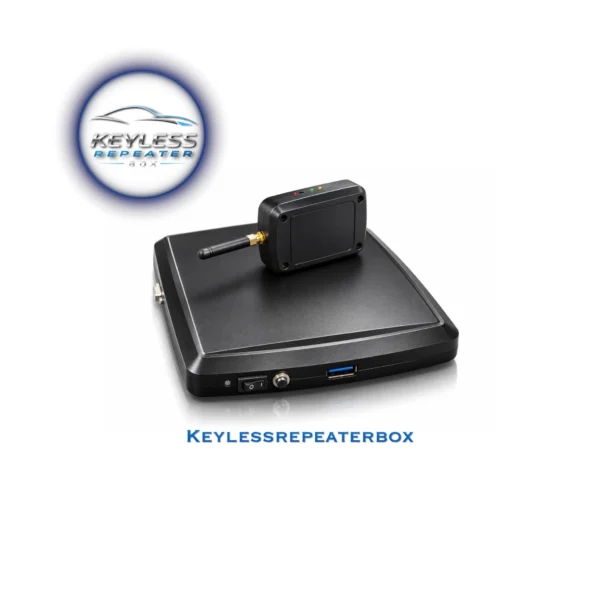
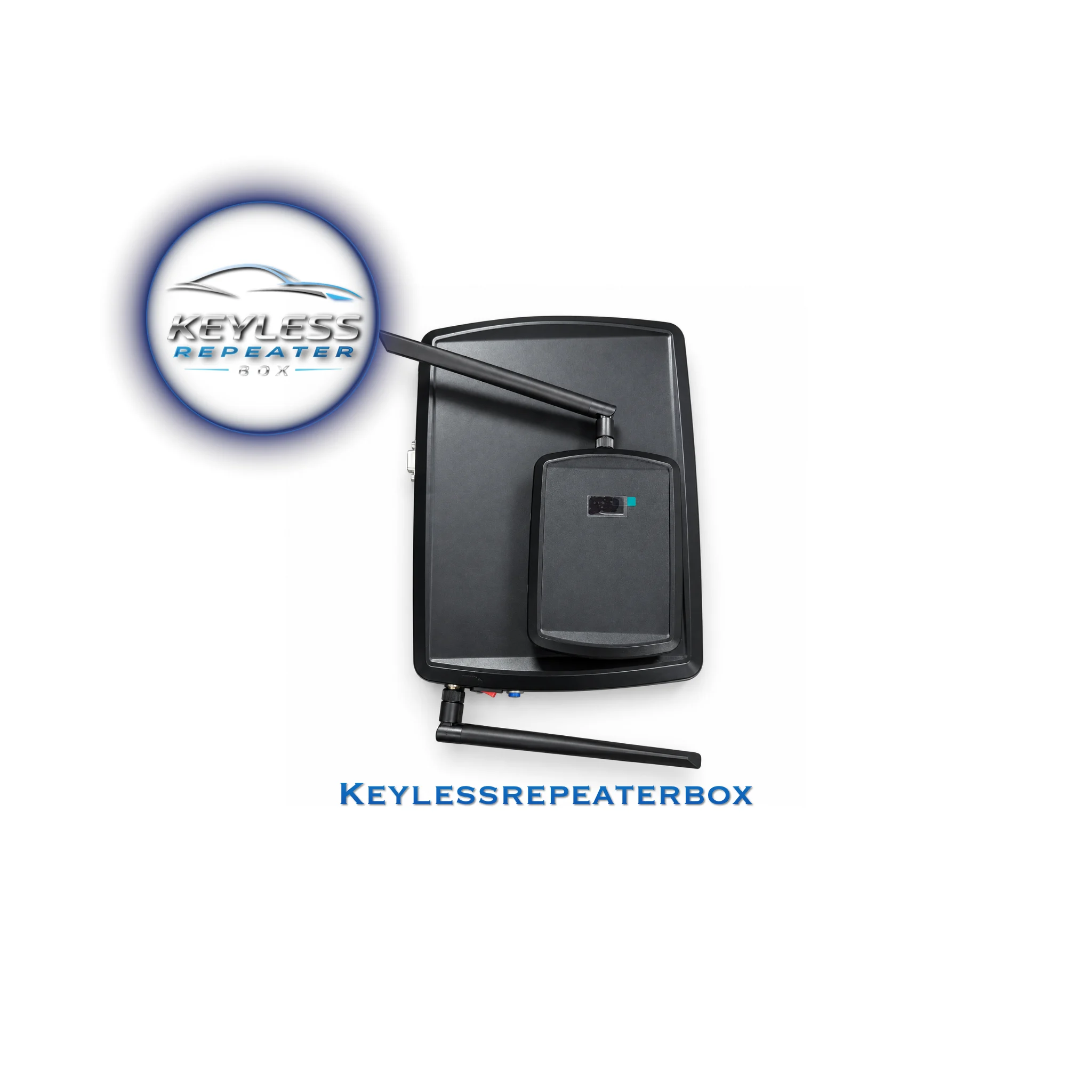
Keyless Go Repeater AKS PRO LONG Multibrand Audi, Volkswagen, Porsche, VAG, Skoda, Toyota, Lexus Relay Attack
Delivery is carried out throughout worldwide, exclusively using courier services, specify the possibility of delivery to your country.
All devices on the site are presented for informational purposes only and are intended for state. institutions in the field of security, special services and car services, consultations, questions and suggestions send by contact information listed on the resource keylessrepeaterbox.com. Checking and testing alarms for cars, barriers, automation, gates, the role of shutters, etc., is allowed only with the consent of the owner, provided that the actions are lawful and do not violate the laws of your country.
Warranty: 12 months by default for all products unless explicitly stated otherwise on the individual product page. Exact warranty terms and coverage for a specific order are confirmed by our manager.
AKS PRO Long — Operating Modes and Vehicle Compatibility
Manual and Intended Use
Download the user manual here.
This device is intended for authorized specialist use and is not intended for unlawful activities.
Important: The device does not work with UWB keys. Refer to the manual for the known list of vehicles equipped with UWB-enabled keys. This exclusion applies to all operating modes.
Availability and Delivery
The product is available from our store. Courier delivery is available following 100% advance payment.
System Overview
AKS PRO Long is a radio transceiver system that relays and amplifies received signals to extend the communication link. It is a relay device, not a code grabber.
Also known as a Keyless Relay Stick, Universal Stick, Long Arm, Wave or Multibrand system, it operates with supported vehicles equipped with factory-installed Keyless Go or Keyless Entry systems. Its functions include unlocking, locking and engine starting.
This version supports both one-way and two-way operation. The operating modes and compatibility information are listed below.
Controls and Battery Charging
The system provides automatic adjustment and control from the smaller vehicle-side module. Signal power directed towards the key can be adjusted from the smaller module. The smaller module indicates signal presence and signal strength near the vehicle.
Both the larger and smaller modules feature intelligent battery charging.
Mode Selection
The smaller module is the control unit. Select a mode on the smaller module; the corresponding mode is automatically selected on the larger module.
Operating Modes
One-Way Operating Modes
- 1. Toyota Mode — 134 kHz: Toyota, Lexus and Subaru vehicles from 2005–2026, and Tesla vehicles using the car-shaped key fob. UWB keys are excluded.
- 2. Multibrand Mode — 125 kHz: BMW, Mazda, Range Rover, Land Rover, Volkswagen, Honda, Ford, Nissan and Infiniti; Audi up to 2011; Mercedes-Benz up to 2013; Porsche up to 2021; Chinese vehicles; and other brands and models except those assigned to modes 1 and 3.
- 3. Audi and Mercedes-Benz Mode — 21 kHz: Audi 2011–2026; Mercedes-Benz 2013–2026; Porsche 2021–2026; Volkswagen Touareg 2013–2025.
Two-Way Operating Modes
- 1. TOY-LEX — Toyota and Lexus — 433 and 315 MHz: Key families A9, AA and BA. See the Toyota and Lexus support list below for the detailed key variants.
- 2. MLB Evo — Audi, Porsche and Volkswagen — 344 and 315 MHz: Audi from 2016, excluding Q1 and Q3; Porsche from 2021; Volkswagen Touareg from 2021.
- 3. MQB 48 and 49 — Volkswagen, Skoda and SEAT: Tiguan and other listed MQB vehicles. See the MQB and MQB Evo reference lists below for generation and key information.
- 4. Porsche Before MLB Evo: See the Cayenne and Panamera generation lists below.
Functions Under Development
MLB first generation; Honda; Mazda; BMW; Chinese vehicles.
TOY-LEX Key Detection
For supported Toyota, Lexus and Subaru systems, TOY-LEX mode includes key detection and recognition. The operator of the larger module can see whether a compatible key is within the operating range. The smaller module separately indicates signal presence and strength near the vehicle.
Range and Communication
The communication link between the modules reaches up to 300 metres, including in built-up urban areas and indoors. This range provides radio-link margin for transmission through obstacles.
The effective operating range depends on the original key-to-vehicle radio link: typically 100–200 metres and rarely more than 250 metres. The key battery condition also affects range. The range between the modules and the distance from the larger module to the key are separate specifications.
The radio-link margin helps maintain communication through reinforced-concrete walls and in busy parking areas. For example, when the operator is indoors and the vehicle is in a courtyard, the link may need to pass through several walls.
Module Placement and Operating Principle
The system consists of a receiving module near the vehicle and a transmitting module near the original key. Once activated, the modules establish a data link that relays vehicle requests to the key and returns the responses.
- The smaller receiving module should be positioned 10–30 cm from the door handle, near the vehicle antenna.
- The larger transmitting module should be within 5–7 metres of the key, with its antenna plane aligned horizontally towards the key.
- Incorrect orientation may reduce effective range.
- With optional extended antennas, the operating distance to the key can reach up to 15 metres.
Inside the vehicle, the smaller module functions similarly to the original key. Its required position varies by vehicle model.
Listed Tested Brands
- BMW
- Mercedes-Benz
- Audi
- Mazda
- Honda
- Toyota
- Lexus
- Subaru
- Nissan
- Infiniti
- Hyundai
- Kia
- Porsche
- Citroen
- Peugeot
- Renault
- Mitsubishi
- Volkswagen
- Dodge
- Tesla Model S only
Other Chinese, Japanese, Korean, German and American vehicles are also listed.
The listed brands have been personally tested, according to the supplied description. The specific operating-mode lists provide the detailed model and year information. UWB keys remain excluded.
MLB Evo Vehicle Reference List
Years below are calendar years. Sales launch dates and model years may differ by market. Generation and body code are the primary reference criteria. Some electric vehicles may use an additional authorization chip, depending on the sales market.
| Brand | Model and generation | Calendar years | Included versions |
|---|---|---|---|
| Audi | A4 B9 / B9.5, 8W | 2015–2025 | Sedan, Avant, allroad, S4 |
| Audi | A5 II, F5 / B9 | 2016–2024/2025, depending on market and body style | Coupe, Sportback, Cabriolet, S5, RS5 Coupe and Sportback |
| Audi | A6 C8, 4K | 2018–2025 | Sedan, Avant, allroad, S6, RS6 Avant |
| Audi | A7 II, 4K8 | 2018–2025; introduced in 2017 | Sportback, S7, RS7 |
| Audi | A8 D5, 4N | From 2017, including 2026 vehicles | A8, A8 L, S8 |
| Audi | Q5 II, FY / 80A | Late 2016–2025 | Q5, SQ5, hybrids; Sportback from 2021 |
| Audi | Q7 II, 4M | 2015–2026 | Q7, SQ7, hybrids, both facelifts |
| Audi | Q8 I, 4M / F1 | From 2018, including 2026 vehicles | Q8, SQ8, RS Q8, hybrids |
| Audi | e-tron, GE | 2018–2022, before renaming | e-tron, Sportback from 2020, e-tron S and S Sportback |
| Audi | Q8 e-tron, GE | 2023–2025 | Q8 e-tron, Sportback, SQ8 e-tron and SQ8 Sportback e-tron |
| Volkswagen | Touareg III, CR | 2018–2026 | Petrol, diesel, eHybrid and R eHybrid |
| Porsche | Cayenne III, E3 / 9YA | From 2017, including 2026 vehicles | Base, S, GTS, Turbo, hybrids; 2023 facelift |
| Porsche | Cayenne Coupe, E3 / 9YB | From 2019, including 2026 vehicles | Base, S, GTS, Turbo, Turbo GT and hybrids |
| Bentley | Bentayga I, 4V | From 2015; sales from 2016 | W12, V8, Diesel, Hybrid, S, Speed and facelift |
| Bentley | Bentayga EWB | From 2022 | EWB, including Azure and Mulliner |
| Lamborghini | Urus I | From late 2017; sales from 2018 | Urus, S, Performante; SE hybrid from 2024 |
The supplied platform reference identifies five brands using MLB Evo: Audi, Volkswagen, Porsche, Bentley and Lamborghini. It states that Skoda, SEAT, Cupra and Bugatti have no production models on MLB Evo.
The main Audi families are identified in the factory Q8 technical training material. The original e-tron and Q8 e-tron use an adapted electric version of MLB Evo. Touareg CR is also identified as MLB Evo, with production stated to end in 2026. Bentayga and Urus are the other large SUV families listed for this architecture.
Models Excluded from MLB Evo Operation
The following models are listed as not working in the MLB Evo section. They must be distinguished from other operating modes and functions under development.
| Model | Architecture or reason for exclusion |
|---|---|
| Porsche Macan with combustion engine, 95B | Previous MLB, including the 2021 facelift |
| Volkswagen Phideon | Previous MLB, not MLB Evo |
| Volkswagen Touareg I / II | PL71 / PL72 |
| Porsche Panamera and modern Bentley Continental GT / Flying Spur | MSB |
| Audi A5 B10, A6 C9, Q5 III and Q7 III | PPC |
| Macan Electric, Cayenne Electric, Audi Q6 e-tron and A6 e-tron | PPE |
| Audi e-tron GT and Porsche Taycan | J1 |
Earlier MLB Generation Under Development
Porsche Macan, other Audi vehicles from 2011–2016 and Volkswagen Touareg 2011–2018 are listed under the earlier MLB first-generation function, which is currently under development.
Macan remains on the previous MLB architecture, without a transition to MLB Evo.
| Macan version | Code | Calendar years | Platform |
|---|---|---|---|
| Pre-facelift | 95B | 2014–2018 | MLB |
| First facelift, 2018 update | 95B | 2018–2021 | MLB |
| Second facelift, 2021 update | 95B | 2021–2026 | MLB |
Porsche Before MLB Evo
Cayenne Generations
| Version | Generation and code | Calendar years | Platform |
|---|---|---|---|
| Cayenne I pre-facelift | E1 / 9PA, commonly 955 | 2002–2006 | PL71 |
| Cayenne I facelift | E1 II / 9PA, commonly 957 | 2007–2010 | PL71 |
| Cayenne II pre-facelift | E2 / 92A, commonly 958.1 | 2010–2014 | PL72 |
| Cayenne II facelift | E2 II / 92A, commonly 958.2 | 2014–2017; MY2018 also occurs | PL72 |
| Cayenne III transition | E3 / 9YA | From 2017 | MLB Evo |
Panamera Generations
Panamera did not use MLB Evo.
| Version | Code | Years | Architecture |
|---|---|---|---|
| Panamera I pre-facelift | 970 | 2009–2013 | Dedicated first-generation architecture |
| Panamera I facelift | 970 | 2013–2016 | Same architecture |
| Panamera II | 971 | 2016–2023 | MSB, not MLB Evo |
MQB and MQB Evo Key Reference
48/49 identifies the earlier key family; the specific variant depends on the configuration. “UWB confirmed” means UWB is documented for equipped versions of that generation. “Check” means the key cannot be reliably identified from the platform alone.
Vehicles with UWB keys are excluded from device operation. The following tables retain the supplied generation and key reference information, including UWB entries.
Volkswagen
| Model | Earlier generation and years | Earlier key | MQB Evo generation or transition | New key or UWB |
|---|---|---|---|---|
| Golf | VII, 2012–2020 | MQB48 | VIII, 2019/2020; VIII.5, 2024 | UWB confirmed |
| Golf Sportsvan | 2014–2020 | Check configuration | No direct successor | Not specified |
| Passat Europe | B8, 2014–2024 | MQB48; check late versions | B9, 2023/2024 | Check key number and UWB |
| Magotan China | B8, 2016–2024 | 48/49; check | B9, 2024 | Check |
| Passat China | MQB generation from 2018 | Check | Passat Pro, 2024 | Check |
| Arteon / CC China | Arteon from 2017; CC from 2018 | MQB48 occurs | No confirmed direct transition | Not specified |
| Touran | II from 2015 | MQB48 occurs | No direct MQB Evo successor | Not specified |
| Tiguan | II, 2016–2024 | MQB48 occurs | III, 2023/2024 | Check |
| Tiguan Allspace / Tiguan L | Extended II from 2017; dates vary by market | 48/49; check | European successor is Tayron | Check |
| Tiguan X China | From 2020; Tiguan II derivative | Check | Separate transition not confirmed | Not specified |
| Tayron China | I from 2018 | Check | II / Tayron L, 2024/2025 | Check |
| Tayron X China | From 2020 | Check | Separate transition not confirmed | Not specified |
| Tayron Europe | Predecessor is Tiguan Allspace | Not specified | 2024/2025 | Check |
| T-Roc | I, 2017–2025 | MQB49/5C occurs | II, 2025 | Check |
| T-Roc Cabriolet | From 2020, based on generation I | Check | Do not equate with T-Roc II | Not specified |
| Atlas / Teramont | I from 2017, including facelifts | MQB48 occurs | Teramont Pro China, 2025 | Check; do not transfer automatically to US Atlas |
| Atlas Cross Sport / Teramont X | From 2019 | Check | Separate transition not confirmed | Not specified |
| Lamando China | I, 2014–2022 | Check | Lamando L, 2022 | Check |
| Caddy | Previous Caddy, 2003–2020, PQ35 | Do not classify the whole family as MQB48 | New generation, 2020/2021 | UWB confirmed |
| Multivan | T5/T6/T6.1, 2003–2022; separate architecture | Not wholly an MQB family | T7, 2021/2022 | UWB confirmed |
| Talagon China | No direct predecessor | Not specified | 2021 | Check |
| Tavendor China | No direct predecessor | Not specified | 2022 | Check |
| Lavida | III from 2018 | Check | Lavida Pro, 2025, as listed | Check |
| Sagitar / Jetta | Jetta VII / Sagitar, 2018/2019 onward | Both 48 and 49 occur | Sagitar L China, 2025, as listed | Check; do not transfer to US Jetta |
The new Caddy is usually called Caddy V; the supplied reference uses a different numbering scheme.
The supplied text states that Volkswagen confirms MQB Evo for Passat B9, Tiguan III, Tayron and T-Roc II. Platform confirmation does not by itself identify the key transponder.
Audi
| Model | Previous generation and years | Earlier key | MQB Evo transition | New key or UWB |
|---|---|---|---|---|
| A3 / S3 / RS3 | III, 8V, 2012–2020 | MQB48 | IV, 8Y, 2020 | UWB confirmed |
| Q3 / RS Q3 | II, F3, 2018–2025 | MQB48 occurs | III, 2025 | Check |
| Q3 Sportback | I, 2019–2025 | Check configuration | II, 2025 | Check |
| Q6 China with combustion engine | No direct predecessor | Not specified | 2022, as listed | Check platform variant and key; not Q6 e-tron |
Skoda
| Model | Previous generation and years | Earlier key | MQB Evo transition | New key or UWB |
|---|---|---|---|---|
| Octavia | III, 5E, 2012–2020 | MQB48 | IV, NX, 2019/2020 | UWB confirmed |
| Superb | III, 3V, 2015–2024 | MQB48 occurs | IV, 2023/2024 | UWB confirmed for equipped versions |
| Kodiaq | I, 2016–2024 | MQB48 occurs | II, 2023/2024 | Check the specific key and UWB |
| Kodiaq GT China | From 2018; generation I derivative | Check | Do not equate automatically with Kodiaq II | Not specified |
The supplied reference states that Skoda confirms UWB for Octavia IV and equipped versions of the new Superb. It therefore does not support a blanket assumption that all Superb vehicles through 2025 use the earlier key.
SEAT Cupra and Jetta
| Brand and model | Previous generation | MQB Evo transition | New key or UWB |
|---|---|---|---|
| SEAT Leon | III, 5F, 2012–2020; MQB48 | IV, KL, 2020 | UWB confirmed |
| Cupra Leon | Predecessor is SEAT Leon Cupra III | 2020 | Check configuration |
| Cupra Formentor | No direct predecessor | 2020/2021 | UWB confirmed |
| Cupra Terramar | No direct predecessor | 2024 | Check |
| Jetta VS8 China | Do not equate automatically with a new VS7 generation | 2025, as listed | Check |
The supplied reference attributes UWB confirmation to ADAC for Golf VIII, A3 IV, Leon IV, Octavia IV, Formentor, the new Caddy and Multivan T7. This applies to the relevant equipped versions, not every configuration.
MQB Models Not Automatically Classified as MQB Evo
| Brand | Models and generation introduction | Key family |
|---|---|---|
| Volkswagen | Polo VI 2017; T-Cross 2019; Virtus 2018; Nivus 2020; Taigo 2021 | 48/49; check configuration |
| Volkswagen | Bora IV 2018; Taos 2020/2021; Tharu 2018; Viloran 2020 | Check |
| Volkswagen | Taigun India 2021; Virtus India 2022; Tera 2025 | Check |
| Audi | A1 II 2018; Q2 2016; TT III 2014–2023 | MQB48 occurs; check specific key |
| Skoda | Karoq 2017; Scala 2019; Kamiq 2019; Fabia IV 2021 | 48/49; check |
| Skoda | Kushaq 2021; Slavia 2021/2022; Kylaq 2025 | Check |
| SEAT / Cupra | Ibiza V 2017; Arona 2017; Ateca 2016; Cupra Ateca 2018 | 48/49; check |
| SEAT | Tarraco 2018–2024 | MQB48 occurs |
| Jetta | VS5 2019; VS7 2020; VA7 2025 | Check |
Toyota and Lexus Key Support List
HT AA and HT BA, including Hitag variants, are excluded from the following two-way TOY-LEX key lists. The retained families are A9/A91/A92, ordinary AA and BA/B9.
A9, A91 and A92
| Brand | Model | Years | Key |
|---|---|---|---|
| Lexus | IS | 2020–2026; source entry is 2020–2022 (2022–2026) | A91 |
| Lexus | LC | 2017–2020 | A91 |
| Lexus | RC | 2020–2023 | A91 |
| Lexus | NX | 2020–2022 | A91 |
| Lexus | RX | 2015–2019 | A91 |
| Lexus | RX | 2019–2022 | A92 |
| Lexus | LX | 2020–2022 | A9 |
| Lexus | LM | 2020–2023 | A9 |
| Toyota | C-HR / IZOA | 2016–2023 | A9 |
| Toyota | 4Runner | 2016–2023 | A9 |
| Toyota | Prado J150 | 2021–2023 | A9 |
| Toyota | Camry XV70 | 2017–2023 | A9 |
| Toyota | Sequoia | 2018–2022 | A91 |
| Toyota | Aqua / Prius c | 2015–2021 | A92 |
| Toyota | Prius IV | 2015–2023 | A92 |
| Toyota | Prius PHEV / Prime | 2017–2022 | A92 |
| Toyota | Prius V / alpha / + | 2014–2021; USA 2014–2017 | A92 |
| Toyota | Alphard / Vellfire | 2015–2022 | A9 |
| Toyota | Tacoma | 2019–2023 | A91 |
| Toyota | Tundra | 2020–2023 | A91 |
AA Without Hitag
| Brand | Model | Years |
|---|---|---|
| Lexus | ES 200 / 350 | 2018–2022 |
| Lexus | LS 500 / 500h | 2017–2022 |
| Lexus | LC | 2020–2023 |
| Lexus | UX | 2018–2023 |
| Lexus | RX USA | 2021–2022 |
| Toyota | Highlander / Crown Kluger | 2019–2026 |
| Toyota | RAV4 / Wildlander | 2018–2023 |
| Toyota | Avalon | 2019–2023 |
| Toyota | Mirai | 2020–2022 |
| Toyota | Crown / Hongqi H7 | 2018–2022 |
BA and B9 Without Hitag
| Brand | Model | Years | Key |
|---|---|---|---|
| Lexus | ES | 2023–2025 | BA/B9 |
| Lexus | LS | 2023–2026 | BA/B9 ? |
| Lexus | UX | 2023–2026 | BA/B9 |
| Lexus | NX | 2022–2026 | BA/B9 |
| Lexus | RX | 2022–2025 | BA/B9 |
| Lexus | RX 450h, additional entry | 2024+ | BA/B9 |
| Lexus | GX | 2023–2025 | BA/B9 |
| Lexus | LX | 2022–2025 | BA/B9 |
| Lexus | LBX | 2023–2026 | BA/B9 |
| Lexus | RZ | 2023–2026 | BA/B9 |
| Lexus | TX USA | 2023–2026 | BA/B9 |
| Lexus | LM | 2023–2026 | BA/B9 |
| Toyota | C-HR / IZOA II | 2023+ | BA |
| Toyota | Crown Crossover | 2022+ | BA |
| Toyota | Crown Sport Z | 2022+ | BA |
| Toyota | Crown Estate / Signia | 2024+ | BA |
| Toyota | 4Runner N500 | 2024+ | BA |
| Toyota | bZ4X | 2022–2025 | BA |
| Toyota | Harrier / Venza | 2022+ | BA |
| Toyota | Grand Highlander | 2023+ | BA |
| Toyota | Prado / LC250 | 2023–2025 | BA |
| Toyota | Land Cruiser 300 | 2021–2025 | BA |
| Toyota | Sequoia | 2022+ | BA |
| Toyota | Urban Cruiser Electric / Suzuki e Vitara | 2025+ | BA |
| Toyota | Avalon | 2024+ | BA |
| Toyota | Camry USA | 2023+ | BA ? |
| Toyota | Mirai | 2023+ | BA |
| Toyota | Crown | 2022+ | BA |
| Toyota | Venza | 2020–2024 | BA |
| Toyota | Prius V, XW60 | 2023–2026 | BA/B9 |
| Toyota | Prius PHEV / Prime | 2023–2026 | BA |
| Toyota | Alphard / Vellfire | 2023–2026 | BA |
| Toyota | Granvia / HiAce SG / GranAce / Majesty / Quantum VX | 2019–2024 | BA |
| Toyota | HiAce H300 | 2019–2023 | BA |
| Toyota / Suzuki | Innova / Kijang / Crysta / Zenix / HyCross / Invicto | 2023–2026 | BA |
| Toyota | Noah / Voxy / Esquire | 2022–2026 | BA |
| Toyota | Sienna | 2020–2022 | BA |
| Toyota | Tacoma / Tacoma i-FORCE MAX | 2023–2026 | BA |
| Toyota | Hilux | 2025+ | BA |
| Toyota | Tundra / Tundra i-FORCE MAX | 2023–2026 | BA |
| Subaru | Outback / Wilderness | 2025+ | BA/B9 |
| Subaru | Solterra | 2022–2027 | BA |
| Subaru | Forester SL | 2024+ | F4 (BA) |
| Suzuki | Across | 2021–2025 | BA |
Entries with Multiple Key Variants
| Model | Years | Source designation |
|---|---|---|
| Lexus GX | 2020–2023 | A9 / AA |
| Toyota LC200 | 2020–2022 | A91 / AA, depending on market |
| Toyota Noah / Voxy / Esquire / Noah G / Noah Si | 2014–2021 | 88 / A91 |
| Toyota RAV4 / Wildlander | 2023–2025 | BA / BB |
| Toyota RAV4 PHEV / Prime | 2021–2025 | BA / BB |
| Toyota Highlander / Subaru Getaway | 2026+ | BB / B9 |
Package Contents
One larger key-side module; one smaller vehicle-side module; charger.
Updates, Warranty and Support
The device undergoes continuous improvements, updates and vehicle testing. Devices manufactured by our company include a one-year warranty, servicing, current software updates and customer support.